Built for changing conditions.
Shop Hiking







Our Visit to Middlehurst Station: A Journey to the Source
Middlehurst Station is a landscape that inspires our move to a natural ethos. Visiting allowed us to reconnect with the origins of our merino fibre at one of the 70 stations that make up the icebreaker Grower Club. This unique model is built on 10-year contracts, providing the long-term security that allows families like the Macdonalds to focus on the future.

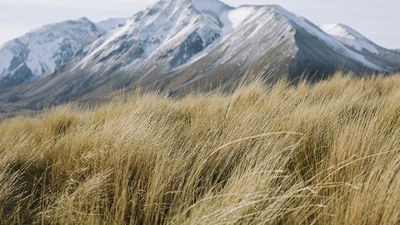
In the first week of February, our NZA team travelled into the remote upper Awatere Valley with Olympic gold medalist Lily Xu and our APAC General Manager, Catherine. The journey began with an early flight into Blenheim followed by a three-hour drive into the high country. As the road wound deeper into the mountains, the landscape opened into 16,550 hectares of river plains and steep contours, reaching elevations between 550 and 2,500 metres.
Since 1998, Willie and Susan Macdonald have built a legacy grounded in kaitiakitanga (guardianship). Inside "The Quarters," we were inspired by the stories in From the Women, For the Land, a magazine we saw at the farm that celebrates the female perspective on high-country stewardship. This philosophy was echoed by Susan during our visit: “Our priority is to look after the land, to be good custodians and stewards of the land. That's really everything else follows on from that. Because if we don't look after this land, it won't look after us for future generations. It's really as simple as that.”

The Magic of the Fibre
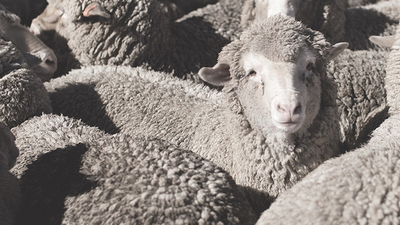
As we drove across the station in a convoy of 4-wheel drives, we saw the merino sheep thriving in their vertical world. The "magic" of this fibre is a result of these extreme conditions. To survive the dramatic temperature swings of the Inland Kaikoura Ranges, these sheep grow a fleece with a complex protein structure that is:
- Breathable & Thermoregulating: Moving moisture away from the skin before it turns to sweat.
- Odour Resistant: Naturally resisting the growth of bacteria.
- Resilient: Forged by the wind and snow to be incredibly durable.

The icebreaker Standard
But not all wool is created equal. icebreaker maintains a selective, high-quality standard that Susan and her family have embraced for over a decade. As Susan explained, “We put this wool on our sheep, because we wanted to grow wool for icebreaker. We had a destination for our wool, and I wear it everyday - wear it for work, wear it when I go to town.” By selecting only the finest microns and the cleanest, longest fibres, we ensure that the "magic" of the high country translates into a garment that is soft against the skin, devoid of the traditional "itch" of wool, and capable of performing in the world's harshest environments.
After a day spent exploring the hills and sharing Sue’s famous cinnamon scrolls at a high-country hut, we returned to settle into the calm of the evening. Dinner was prepared using lamb from the station butchery and eggs from their own chickens, followed by board games and a wood-fired hot tub beneath a sky full of stars.

Leaving Middlehurst, we felt a deeper appreciation for the 10-year bond we share with our growers. We are inspired by Susan’s vision for the future: “To keep producing beautiful wool like this, and to watch the next generation doing it.” It reinforced a truth we hold close: natural performance starts here, with growers who respect the land and choose to farm in a way that puts nature first.
The Science of Softness: The icebreaker Merino Standard
While all sheep grow wool, not all wool is created equal. To meet the icebreaker standard, the fibre grown at Middlehurst must pass rigorous selection criteria. This ensures that the natural "magic" of the merino remains intact while providing the next-to-skin comfort our community expects.
1. The Micron Difference (Softness vs. Itch)
Traditional wool is often thick and coarse, with a high "micron" (the measurement of the fibre's diameter). When these thick fibres touch the skin, they don't bend; they prick the nerve endings, causing the well-known "wool itch."
- Standard Wool: Usually >30 microns. Stiff and prickly.
- icebreaker Merino: We select only the finest fibres (typically 15.5 to 19 microns). These fibres are so thin they simply bend when they touch the skin, resulting in a silk-like softness.

2. The Architecture of the Fibre
The magic of Middlehurst merino lies in its internal structure. Each fibre is composed of a complex protein arrangement that allows it to manage moisture and temperature far better than any synthetic.
- The Cortex: The heart of the fibre. It consists of two types of cells that absorb different amounts of moisture, causing the fibre to crimp. This natural spring-like "crimp" creates tiny pockets of trapped air—the ultimate natural insulator.
- The Cuticle (Scales): The outer layer of the fibre is covered in overlapping scales. In lower-quality wool, these scales can be jagged. The icebreaker standard ensures a smooth cuticle, which contributes to the soft hand-feel and natural water repellency.
3. Active Thermoregulation
Unlike synthetics, which simply trap heat, merino is a "reactive" fibre. It undergoes a process called adsorption. When the fibre absorbs moisture, it releases a small amount of heat (enthalpy of sorption), keeping the wearer warm in the cold. Conversely, in the heat, it manages the evaporation of sweat to keep the body cool.
4. The Cleanliness & Length (Strength)
To ensure durability, we select for "staple length" - the length of the individual wool clusters. Longer fibres mean fewer ends poking out of the yarn, which results in a stronger, smoother fabric that resists pilling. At Middlehurst, the 10-year contract allows the Macdonalds to manage their flock specifically for this consistency.
"To keep producing beautiful wool like this... it's really as simple as that." - Susan Macdonald
By maintaining these exacting standards, we transform the raw beauty of the Awatere Valley into a technical layer that performs in harmony with the human body.